
What is the Bitcoin Mempool and Why Should You Care?
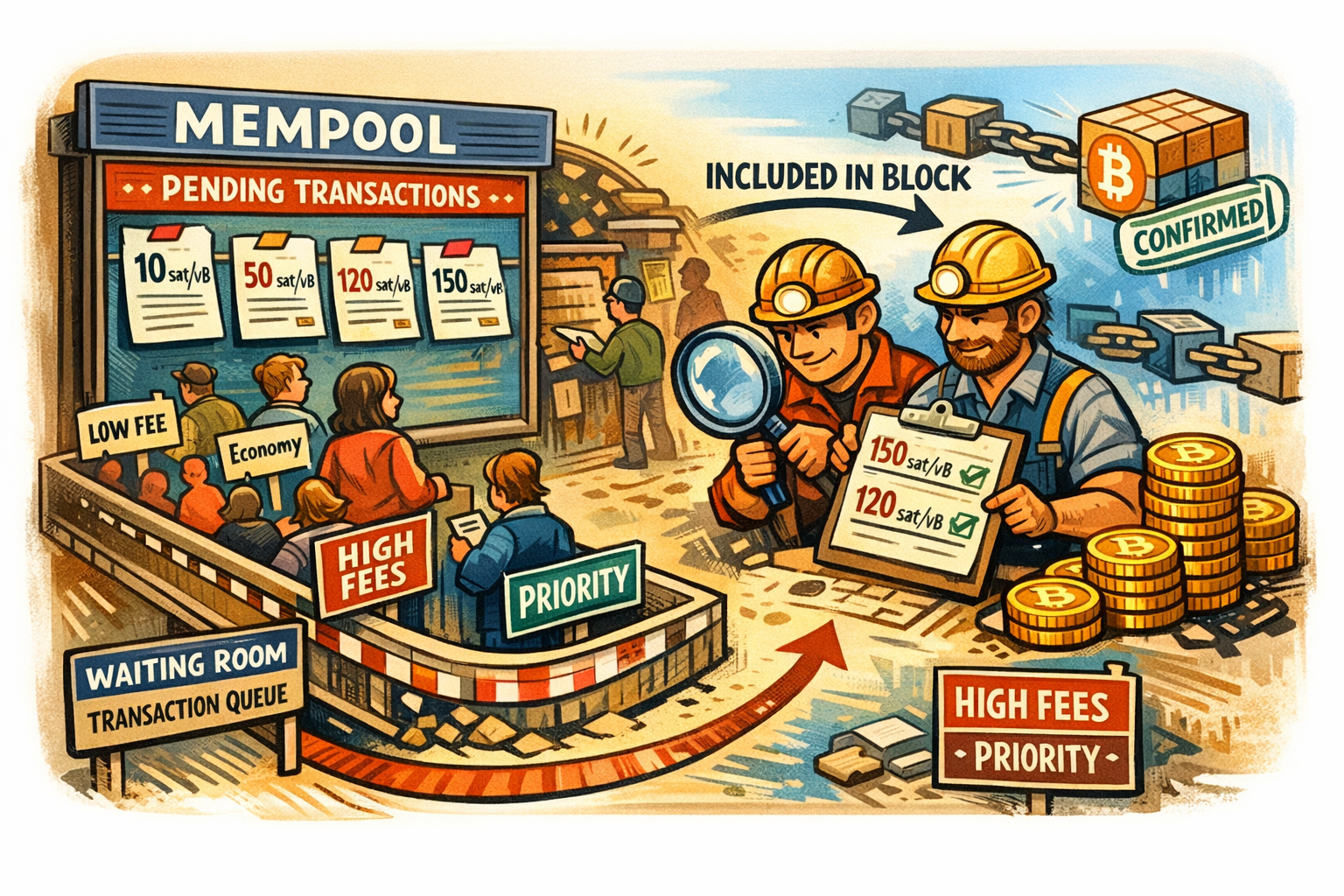
Every time you send Bitcoin, your transaction doesn't land on the blockchain immediately. It sits in a waiting room first. That waiting room is called the mempool — short for memory pool — and understanding how it works explains a lot about Bitcoin's fee market, confirmation times, and why transactions sometimes feel slow.
What the Mempool Actually Is
The mempool is a local data structure maintained by each Bitcoin node. When you broadcast a transaction to the network, it propagates across nodes and sits in each node's mempool until a miner picks it up and includes it in a block. There's no single global mempool — every node maintains its own version, and they can differ slightly based on what transactions each node has seen and chosen to keep.
Think of it as a public bulletin board. You post your transaction, miners read the board and choose which transactions to include in the next block, and once a transaction is confirmed it's removed from the board. If a transaction sits there too long without being picked up, nodes will eventually drop it — typically after two weeks.
How Miners Choose Transactions
Bitcoin blocks have a size limit — roughly 1-4 MB depending on transaction types. Miners can't include every pending transaction in every block, so they have to choose. Their incentive is profit, which means they select transactions offering the highest fee per unit of data (measured in satoshis per virtual byte, or sat/vbyte).
This creates an auction dynamic. When the mempool is empty — demand is low — you can get confirmed in the next block for 1-2 sat/vbyte. When the mempool is congested — demand spikes during a bull run or after a major news event — fees can climb to 100+ sat/vbyte and transactions paying low fees can wait hours or days.
This is why Bitcoin wallets give you fee options. "Economy" means you're willing to wait. "Priority" means you're paying to jump the queue. Neither is wrong — it depends on whether your transaction is time-sensitive.
Why Every Node Has Its Own Mempool
The decentralized nature of Bitcoin means there's no authoritative mempool server. Each node independently decides which transactions to accept and keep based on its own policy settings. By default, Bitcoin Core nodes:
- Accept transactions paying at least 1 sat/vbyte
- Keep a maximum of 300 MB of transactions in memory
- Drop the lowest-fee transactions when that limit is reached
This means if you broadcast a very low-fee transaction during a congested period, many nodes may never even see it — they'll have already dropped it to make room for higher-fee transactions. Your wallet might show the transaction as "pending" indefinitely.
Replace-By-Fee (RBF)
If you broadcast a transaction with too low a fee and it's stuck, you're not necessarily stuck with it. Replace-By-Fee (RBF) is a mechanism that lets you rebroadcast the same transaction with a higher fee, signaling to nodes and miners that they should replace the old version.
Not all transactions support RBF — it needs to be opted into at the time of signing — but most modern wallets enable it by default. If you're building payment tooling or working with BTCpay, understanding RBF matters because it affects how you handle stuck transactions and whether merchants should wait for zero-confirmation transactions or require one block confirmation.
Reading Mempool Data as a Developer
The mempool is a useful signal. Tools like mempool.space give you a real-time visualization of pending transactions, fee rates at different priority levels, and historical fee data. If you're running a BTCpay server and want to set sensible fee defaults for your customers, watching the mempool tells you what fee rate will actually get confirmed in a reasonable time.
From a Bitcoin Core node you can query the mempool directly:
bitcoin-cli getmempoolinfo
This returns the current transaction count, size in bytes, total fees, and minimum fee rate the node is accepting. If you're running your own node — which I am, currently at 56% sync — this is one of the first things you'll want to check when it comes online.
The Bigger Picture
The mempool is where Bitcoin's free market for block space plays out in real time. Miners are incentivized to maximize fee revenue. Users compete to get their transactions confirmed. The result is a dynamic, self-regulating system where transaction priority is determined by willingness to pay rather than by any central authority.
It's one of the more elegant pieces of Bitcoin's design — a decentralized auction running continuously, governed entirely by economic incentives and code.
Tagged
If this post was useful, consider buying me a coffee ☕ with ₿itcoin — no account needed, any amount welcome.